search logo
spacer
Follow O_S_HipHop_Com on Twitter

Posts Tagged ‘DJ’

OldSchoolHipHop.Com Hall of Fame 2006

Members
Grandmaster Flash (Joseph Saddler) b. 1/1/57
Melle Mel (Melvin Glover) b. 5/15/??
Kidd Creole (Nathaniel Glover) b. 2/19/??
Cowboy (Keith Wiggins) b. 9/20/?? d. 9/89
Rahiem (Guy Williams) b. 2/13/??
Mr. Ness aka Scorpio (Eddie Morris) b. 11/12/??

Born in Barbados, Grandmaster Flash is one of the Holy Trinity of Hip Hop.

Flash learned the basic art of cutting between records from Kool Herc in the mid-70′s.

Along with Afrika Bambaataa, Flash was an early competitor of Herc.  Flash recalls Herc embarrassing him because he didn’t have the system (nor did anyone else at the time) that could compete with Herc’s.  He decided to make up for what he was missing in volume with flawless technique.

Not only could Flash cut from one record to the next without missing a beat, he added in a new element.  He would take phrases and sections of different records and play them over other records.  He installed a device that would allow him, through the use of headphones, to hear what was going on on each record.  Herc didn’t use this technique until much later.

He began to develop a following from house parties and block parties.  People would come to hear and see Flash and his partner “Mean Gene” Livingston.  Gene’s brother, a 13 year old named Theodore, practiced with Flash and is often credited as the inventor of “scratching.”  Obviously this technique was mimicked by every DJ and became standard practice.

By 1978, Flash had surpassed Herc in popularity, but there was a decided shift in the realm of hip hop.  While still important, deejays began to take second place to MC’s.

Flash rapped and made the shout outs on his own at first, but he knew if he wanted to remain innovative and retain his flawless turntable technique he needed some help.

He worked for a short time in 1978-79 with Kurtis Blow before recruiting a few of his friends Keith (Cowboy) Wiggins, and two brothers, Melvin (Melle Mel) and the older sibling, Nathaniel (Kidd Creole) Glover.  They soon began writing their own rhymes and calling themselves The Three MC’s.  Over time they added in Guy (Rahiem) Williams and Eddie (Mr. Ness/Scorpio) Morris and became the legendary group Grandmaster Flash and the Furious Five.

They went on to battle the likes of The Treacherous Three and, ironically, Grand Wizard Theodore (Livingston) and The Fantastic Five.

The group recorded the single, “We Rap More Mellow” on Brass Records under the name, The Younger Generation.  They also released a along with a live version of “Flash To The Beat” on Bozo Meko Records under the name Flash and The Five.

They went on to record for Enjoy! Records before moving over to the land of Sugar Hill Records.

Flash is also credited with using the electronic beat box.  He would put it between his turntables and use it to play the beat in between records.

Flash briefly appears in the hip hop film Wild Style cutting records in his kitchen.

In 1981, Flash released what is considered the most influential display of cutting and scratching ever recorded- “The Adventures of Grandmaster Flash on the Wheels of Steel.”  On it he uses sections of Blondie’s “Rapture”, Chic’s  “Good Times,” Queen’s “Another One Bites the Dust,” and sections from some of their previous work.  This was the first time that people heard a song of nothing but a record on a record.

But, without question, the most influential song ever recorded by this group was released in June of 1982, only one week after The Sugar Hill Gang had released “The Lover in You” a much more typical Sugar Hill record.  “The Lover in You” peaked out at #55 on the charts.

“The Message” peaked at #4.

“The Message” changed the playing field for what a rap record could do.  It showed that you could make things other than party songs and still sell records.  It featured Melle Mel and Duke Bootee (a Sugarhill session musician named Ed Fletcher).  It is known that Melle Mel is angry about how everyone else shared credit for the song.  Duke Bootee wasn’t even credited on the song at all.  Critics raved about the song, despite rumors that many members of the group didn’t want to record it in the first place.  Nevertheless it paved the way for such acts as Public Enemy and Boogie Down Productions who would also go on to infuse much of their music with political and social commentaries.

Also along the same lines as “The Message” was the anti drug song “White Lines (Don’t Do It)” which was supposedly a tribute to cocaine before the “don’t do it” was added in later.

By 1983, Run DMC was emerging and Flash and the Five began their fall from the spotlight.  Flash sued Sugar Hill Records for $5 million in royalties.  The suit split the group in half.  Melle Mel leading one side (which included a performance in the film Beat Street) and Flash on the other.  Although they did reunite in 1987 to record a new album, it was not well received and the group disbanded permanently.

In 1989, Cowboy died after spending nearly two years strung out on crack.  He was twenty eight years old.

Production duties for Flash away from the Furious Five and his own material was Donald D’s “Don’s Groove” in 1983  Just Ice’s 1990 album “Masterpiece” was solely produced by him.

Group members appeared in the documentary film The Show.

Melle Mel and Scorpio released an album in entitled “Right Now” 1997.

Grandmaster Flash was the musical director of HBO’s The Chris Rock Show. He also appeared in Jon Favreau’s 2001 motion picture “Made”.

Melle Mel also lent his vocal talents to the Sugarhill Gang for their album “Jump on It.”

Both Flash and Melle Mel released new CD’s in the beginning of 2002.  Melle Mel with his new group Die Hard and Flash on his own entitled “The Official Adventures of Grandmaster Flash” and “Essential Mix: Classic Collection”

Grandmaster Flash has also been working on a new mixer, a turntable tournament, and other projects.

The group was recognized at the VH1 Hip Hop Honors in 2005.

Official Site – GrandmasterFlash.com

Check out a live performance of “The Message”

Additional info by Ed Roberts, Solomonic and Da Ewoks and TMGanalog

Back to MC’s Biographies

OldSchoolHipHop.Com Hall of Fame 2007

Members
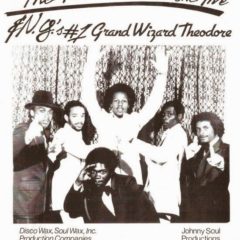
Grand Wizard Theodore (Theodore Livingston)
Waterbed Kev (Kevin Strong)
Master Rob (Robin Strong)
Prince Whipper Whip (James Whipper)
Ruby Dee (Rubin Garcia)
Dot-A-Rock (Darryl Mason)

In Grandmaster Flash’s early days, his partner was “Mean Gene” Livingston.  Gene had a younger brother (who together were known as the L Brothers) that used to practice with Flash named Theodore.

Theodore eventually went on to become GrandWizard Theodore and is credited with inventing two dominant deejay techniques- scratching and the needle drop.  Not a bad thing for ones resume.

It was in the summer of 1975 as he tells the story, “I used to come home from school everyday and play records. This one particular day, my mother banged on the door yelling at me because the music was too loud. When she walked in, I still had my hand on the record that was playing and I kind of moved it back and forth.  When she left, I was like ‘Yo! That sounded kind of cool. I better experiment with that.’”

His initiative to take this accident and recognize it as a means of making original music was pure creative innovation. “I always wanted to be different from other DJs. I kept perfecting my idea so that when I did it in front of an audience it would sound dope.”

In 1978, Whipper Whip and Dot-a-Rock were in a group called The Mighty Gestapo Crew (with DJ Kenny B (Kenny Baker) and Count D) and the Funky Phase Four MC’s.  The battled a crew named The Notorious Two (who’s members included Grandmaster Caz and JDL of the Cold Crush Brothers) at the Intersession Church on 155th Street and Broadway.

Whipper Whip and Dot-A-Rock were also original members of the Cold Crush Brothers.

They are often referred to as the Fantastic Freaks or Fantastic Romantic 5.

They battle many crews of the time most notably the Cold Crush Brothers.

They put out the 12″ “Can I Get A Soul Clap” in 1980 which is still currently available on Tuff City Records.

The group never recorded an album, however, they do appear in the film Wild Style, and on the recently released battle tape against Cold Crush at Harlem World in 1981.

Kevie Kev signed with Sugar Hill Records for a brief period and released the classic single, “All Night Long” in the midsummer of 1983.  Mr. Magic co-produced it under the name, M2 (actually M squared).

Prince Whipper Whip appeared in the Ice-T video for High-Rollers.

The GrandWizard continues to rock parties internationally and teaches DJ master classes. He was inducted into the Technics DJ Hall of Fame in 1998.  Theodore has received Lifetime Achievement Awards from both the International  Turntablists Federation and “Back to Mecca”. GrandWizard served as an esteemed panelist at the Rock and Roll Hall of Fame and Museum’s Hip Hop Conference in 1999 and when the exhibit traveled to the Brooklyn Museum of  Art, in 2000, he taught a phenomenal DJ Master Class, with up and coming DJ Perseus. GrandWizard Theodore is also featured in the DJ documentary  “Scratch” which recently premiered at the 2001 Sundance Film Festival.

Classic Clip from Wild Style

Additional information provided by Da Original Easy Tee, dep1453, ToolsofWar and TMGanalog

Back to MC’s Biographies

Back to DJ’s Biographies

DJ Red Alert is a member of the hip hop culture that is known for bringing the music to the people.

He began his career as part of the Afrika Bambaataa’s Zulu Nation and earned the reputation as a top notch DJ.  At one point in the early 80′s, Red Alert’s equipment was stolen.  Once he was able to get at new setup Bambaataa and other members of the Nation were moving to clubs in Manhattan.  Red Alert continued to draw a following in Harlem.

Red Alert channeled his energies and musical talent into two daily shows on the nations #1 radio station, New York’s WQHT HOT 97.1 FM.

He has received numerous awards and accolades including a special award at the first annual Rap Hall of Fame Awards show. The prestigious Lifetime Achievement Award from IMPACT music trade publication for 1998 and the 1997 Mix Show DJ of the year award from GAVIN. In addition DJ Red Alert was named one of the 50 most influential people in music by Rolling Stone magazine. Red Alert is also featured in an exhibit at the Rock and Roll Hall of Fame in Cleveland, Ohio. The only DJ of this era so honored!

He has appeared in over 50 music videos.

Red was reared by his maternal grandparents, who were from Antiqua.  Red’s love for those around-the-way basketball games led him to his high school team at DeWitt Clinton. No doubt this is where he was dubbed the nickname, “RED”; for his red hair and alert response on the court. Red later received a college basketball scholarship. During the last of his high school years, Red hung out at the Saturday night parties thrown by Kool Herc and Coke La Rock at clubs throughout the west Bronx. Red studied the style of music Kool Herc played and the way he blended the vinyl. On Fridays, Red found himself venturing downtown to check out star disco deejays, such as: Grandmaster Flash, Together Brothers, and Pete DJ Jones.  It wasn’t long before he was jammin’ at parties on his own equipment. It was important to be up on what was happening on the New York scene, so Red was now attending legendary parties throughout the Bronx.

Red caught Grandmaster Flash at the Back Door and the Dixie Club, Kool DJ A.J. at the Morehouse Center and Afrika Bambaataa at JHS 123. By this time, Red had gathered enough record selection and record spinning insight to teach his cousin DJ Jazzy Jay the basics of the art. Jazzy Jay in turn introduced Red to Bambaataa. Bambaataa taught Red about rock, reggae and new wave music. Learning about the various styles of dance oriented music, Red soon became the deejay for Bambaaata and his Zulu Nation, joining the likes of Afrika Islam, the Soul Sonic Force, Grandmixer DST and the Rock Steady Crew.  Through this association, Red began to spin records downtown at such clubs as Negril and Danceteria.

While deejaying at the Roxy, he met Barry Mayo, then program director of NY’s WRKS 98.7 KISS FM. A man of considerable taste, Mayo hired Red to inaugurate the “Dance Mix Party.” Red remained at 98.7 KISS FM for 11 years, becoming the top DJ at the station. During his tenure at KISS, Red became the first individual to popularize dancehall music at a major radio station! Before you knew it, Red met up with producer Vincent Davis, of the Vintertainment Record label, through DJ Chuck Chillout, to produce Red’s First record, “Hip Hop On Wax, Volume 2.” (Part 1 was made by DJ Chuck Chillout of the B-Boys and Part 3 was by DJ Born Supreme Allah).

Another record was “He’s My DJ (DJ Red Alert Goes Berserk)” which featured Sparky D on vocals and was released on NIA records produced by Spyder D.

He also became a member of the Boogie Down Productions, touring the country with KRS One.

Since then, Red has done super mixes for compilation albums on Next Plateau Records and Epic Records.

Now a seasoned veteran as radio jock, club jock and studio man, Kool DJ Red Alert has established his place as one of the world’s premier DJ’s. To top it off Red Alert owns a production and management company, Red Alert Productions (RAP). The company garnered a reputation for developing and promoting new talent. RED is responsible for launching the career of such widely acclaimed acts as the Jungle Brothers, Tribe Called Quest, Black Sheep and Queen Latifah to name a few.

In addition DJ Red Alert was the first to introduce numerous hit records including “Soul II Soul” by Jazzy B and “Hold On” by the group En Vogue!

Red says, “You have to learn how to break a new artist on record by working it in and out with familiar records. People are scared to fall. It’s OK to fall. You must learn how to fall and be strong so you can come back. A DJ is like the pied piper.”

Since his break on the radio, Red Alert has had the opportunity to expand hip hop’s audience as well as break the careers of Boogie Down Productions, Black Sheep, the Jungle Brothers, and A Tribe Called Quest.  He has had cameos on countless albums, and has also released various compilation albums.

Lately he has undergone some professional changes after leaving his radio show.  Well all wait to see what he has in store for us next.

Check Out Red Alert on Kiss FM!

Additional info by Ed Roberts and Toolsof War

Back to DJ’s Biographies

MC Shan.  Roxanne Shante.  Heavy D.  Big Daddy Kane.  Biz Markie.  Chaka Kahn.  MC Lyte.  Craig  G.  LL Cool J.  Master Ace.  3rd Bass.  Boogie Down Productions.  En Vogue.  TLC.  Lords of the Underground.  Monie Love.  Shabba Ranks.  Da Youngsters.  Dr. Dre & Ed Lover.  KRS-ONE.  Capone & Noreaga.  The Alkaholiks.  Mic Geronimo.  Eric B. and Rakim.  Fat Joe.  Funkmaster Flex.

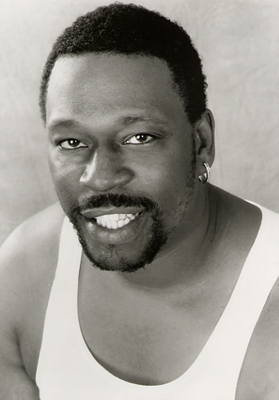
What do these artists have in common?  They have all had tracks or entire albums produced by Marlon Williams.  You may know him as Marley Marl.

He was born on September 30, 1962 in Queens, New York.

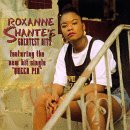
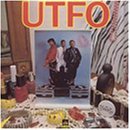
Marley made his name producing tracks for Roxanne Shante in her bid to upstage UTFO.

On a large number of Tuff City’s recordings Marley Marl is credited as having mixed them including Grandmaster Caz’s “Count Basie”, Funkmaster Wizard Wiz’s “Bellevue Patient”, and much of Spoonie Gee’s material on the label.

He recorded a song called “DJ Cuttin’” under the alias NYC Cutter for Pop Art in 1985.

He later became a the backbone of group of rappers known as the Juice Crew.

He is often credited with bringing a more accessible sound to the music.  With others he helped usher in the new era of sampling and was an early master of it.

The only track in which he actually emcees is “I Ain’t Bullshittin’” on Cold Chillin’ in 1990.

Over the past few years, he has been in a legal struggle with former label Cold Chillin’ Records (a label he nearly single handed brought from obscurity to the big time) claiming he was owed over $500,000 in back payments.  The suit was settled out of court and Marley received ownership of all the songs he produced for the label.

As you can tell from the list above, since he began in the early 80′s, he has been working steadily with an array of artists spanning old school to new school artists.

Watch Marley on the Turntables

Additional info by Ed Roberts


Back to DJ’s Biographies